GRAM Pro™
Advanced
data weighing


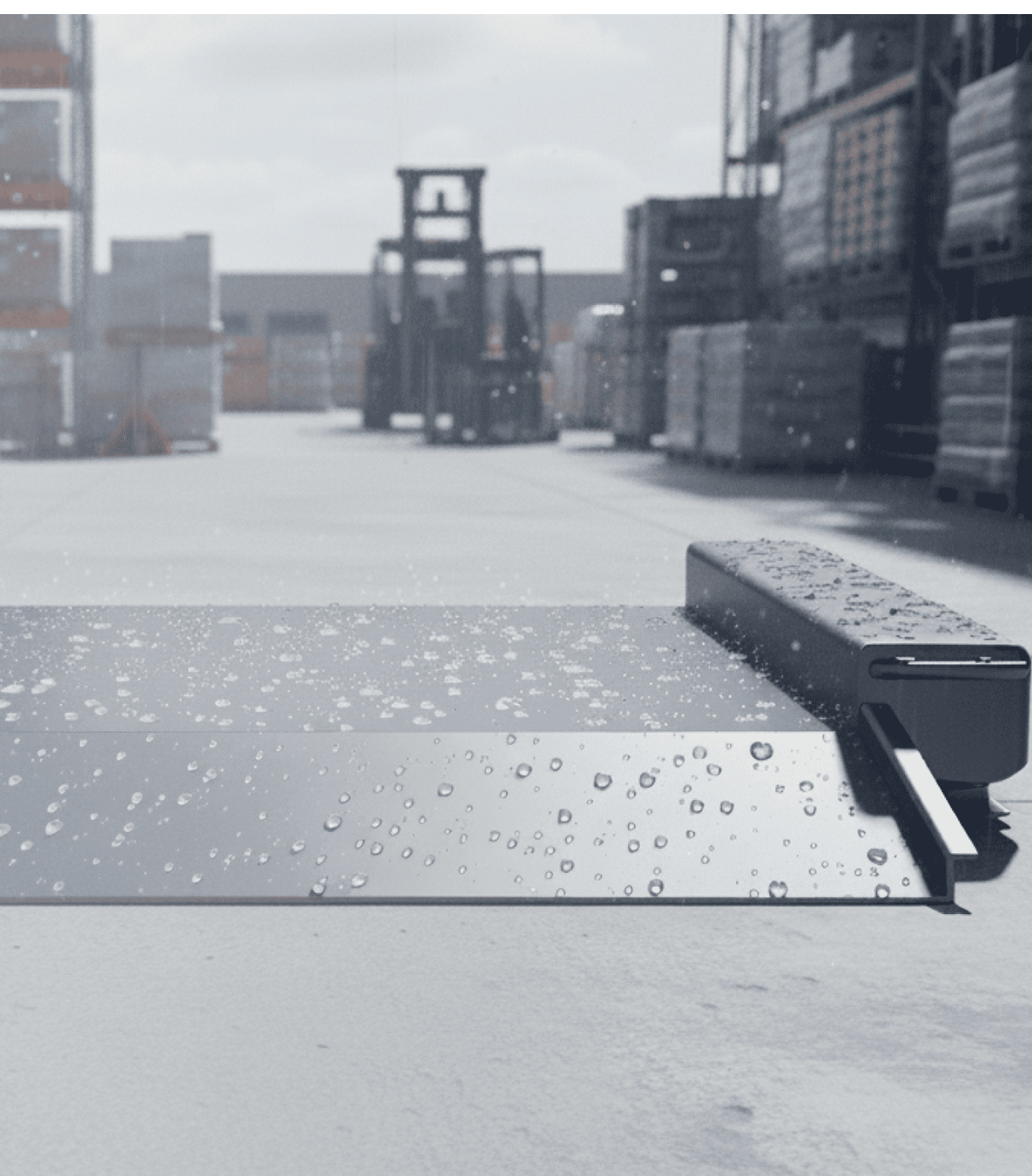
Choosing the right material for an industrial scale is more than a technical detail – it determines how long the equipment will perform reliably under real working conditions. Moisture, aggressive cleaning agents, and chemical exposure are daily realities in industries such as food processing, pharma, and logistics. If the wrong steel is used, corrosion, hygiene issues, and premature failures are inevitable.
Industrial scales are typically built from three types of material:
Epoxy coatings provide a first line of defense but depend on surface integrity. In dry storage areas or basic logistics, this is often sufficient. However, once cracks, scratches, or chemical stress compromise the coating, the underlying steel is exposed and corrosion starts rapidly.
AISI stainless steels solve this differently: their resistance is built into the material itself. Even if the surface is damaged, the passive chromium oxide layer renews itself, ensuring long-term protection. This makes them far more reliable for scales that undergo daily washdowns, exposure to salts, or chemical cleaning routines.
AISI stands for American Iron and Steel Institute. The system classifies steels by their chemical composition and properties. In particular, stainless steels have become internationally standardized under AISI – alongside European systems such as DIN and EN.
The most common series include:
For industrial scales, the most relevant grades are 304 and 316 from the 300 series.
Waterproof industrial scales are used wherever regular cleaning, high humidity, or exposure to aggressive substances is part of daily operations. Typical industries include:
The three key requirements are:
Choosing the wrong steel results in rust, reduced lifespan, and costly downtime
| AISI Grade | Properties | Advantages | Typical Applications |
|---|---|---|---|
| AISI 304 | Chromium-nickel steel, good corrosion resistance | Cost-effective, versatile, hygienic | Standard scales for kitchens, labs, and retail |
| AISI 316 | Chromium-nickel-molybdenum steel, high chloride resistance | Excellent in wet, salty, or chemical environments | Waterproof scales in food & chemical industries |
| AISI 316L | Low-carbon version of 316 | Less prone to intergranular corrosion, better weldability | Precision scales, pharma, medical technology |
| AISI 430 | Ferritic chromium steel, lower cost | Magnetic, more corrosion-resistant than carbon steel but weaker than 304/316 | Basic scales without heavy cleaning |
| AISI 904L | Highly alloyed with nickel & molybdenum | Outstanding resistance to acids and aggressive chemicals | Specialized scales for extreme conditions |
👉 In short:
The choice of the right AISI grade has a decisive impact on the performance and service life of waterproof industrial scales. AISI 304 works as a versatile solution for standard environments, while AISI 316 offers the premium option whenever moisture, salt, or chemicals are involved. For highly demanding conditions, special alloys like 316L or 904L provide maximum safety even under extreme stress.
By selecting the appropriate AISI stainless steel, you ensure long-term measurement accuracy, compliance with hygiene standards, and minimized downtime.