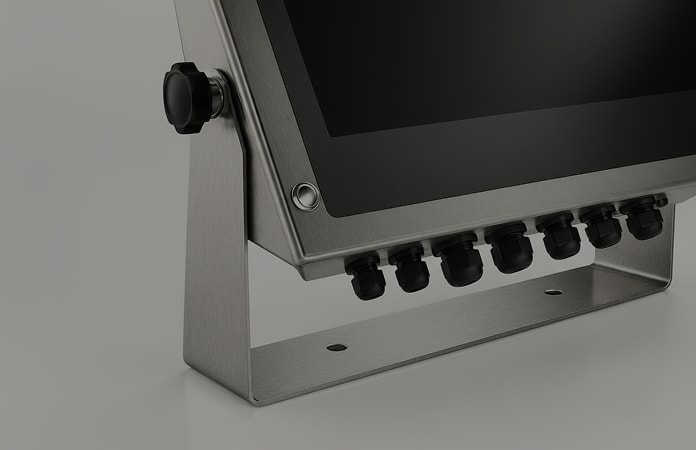
GRAM Pro™
Advanced
data weighing


GRAM connected scales power Welleat’s food waste intelligence platform — turning what’s left on the plate into data that drives real operational change.
France’s collective catering sector wastes 500,000 tonnes of food every year. Not because of carelessness — but because kitchens have been running on estimation, intuition, and paper trails.
When you can’t measure what’s actually being served, consumed, and discarded, you can’t change it.
GRAM provides the connected scales integrated into Welleat’s Anti-Gaspi module — the hardware layer that captures food waste data at tray level, in real time, across every service.
The data doesn’t sit in a spreadsheet. It feeds Welleat’s AI platform, where it becomes production forecasts, menu recommendations, and measurable cost savings.
Weighing is where the loop starts. We close it.
1 — Capture GRAM connected scales installed at the end of service measure food waste plate by plate. No manual input. No estimation.
2 — Transmit Weight data streams directly to the Welleat platform, where it’s cross-referenced with production volumes, menus, and consumption history.
3 — Analyse Welleat’s AI identifies waste patterns, flags overproduction, and surfaces the recipes and portions that actually get eaten.
4 — Act Kitchen teams receive adjusted production quantities for the next service. The data becomes a decision — not a report.
| Impact area | Result |
| Food waste reduction | Up to –50% |
| Production cost savings | –14% |
| Nutritional improvement | +18% |
| Administrative workload | –30% |
| Return on investment | Up to 6€ per 1€ invested |
Results measured after 3 months of deployment across school canteens, hospitals, EHPAD, and corporate restaurants.
Connected weighing isn’t just about accuracy. It’s about what happens to the data next — and who acts on it.